
Despite not being their target audience, I find MSCHF to be a really cool brand. They develop the most absurd concepts to make global challenges tangible. They push their concepts to extremes without compromise. For me, it's the prime example of where strategy and creativity become one.
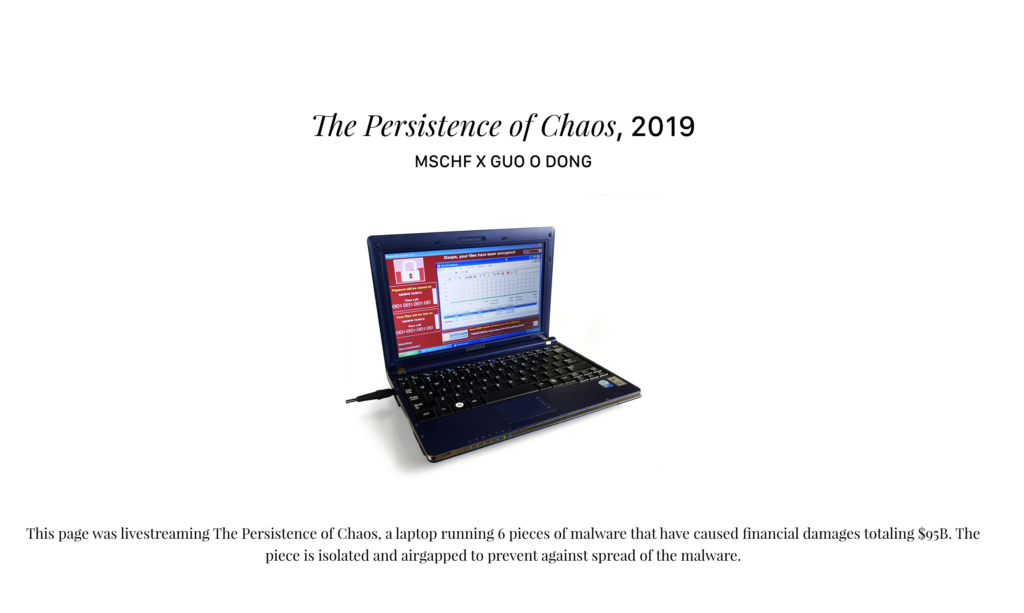
Take a look at their project ‘The Persistence of Chaos’. A sensational art project in which she intentionally infected an old laptop with six of the world's most destructive and harmful computer viruses. The completely isolated device proves how tangible and real the impact of digital threats is. By completely isolating the device from the internet, they were legally able to carry out this project. Ultimately, ‘the device’ was sold for over $1.3 million.
Why am I telling you this? Because it shows that the value of the feeling conveyed is many times greater than the absolute value of the device. And that's what marketing and branding are all about. Conveying a feeling.
How? With a rock-solid concept that you fully commit to. Without compromises.
What is a concept?
A concept is the visual translation of a feeling, idea, or ambition. It is the brand's coat rack to which you can hang everything you do. Both visually and in text. A good concept can be summarized in one sentence. The sentence that is central to everything you do. It can be the tagline you associate with your brand name, but it doesn't have to be. It can also be the sentence you use behind the scenes to anchor everything you do. Thus, a good concept is the common thread in everything you do. This goes beyond shaping your marketing expressions. It determines which collaborations you enter into, what type of colleagues you attract, and how you work together.
Take Red Bull as an example. Everyone knows ‘Red Bull gives you wings’. This slogan is central to everything they do. The wings literally reappear in their visual expressions and are symbolically carried through in every story they tell. In the events they organize, the activities they sponsor, and the way they shape their product.
So, a concept is the overarching idea to which you anchor everything you do. And with that, it's the path to establishing a recognizable brand that people can identify with. Or not (like me and MSCHF).
What makes a concept good and how do I get there?
A good concept is sustainable. Not for two years, but for decades. It provides direction for everything you do and thus contributes to the realization of the organization's vision. A rock-solid concept achieves something. The concept must ‘to cause a little stomach ache’. You have to feel it; with this, I appeal to people and also scare them away.
Getting here requires time, research, and a partner who understands you. A good concept doesn't come out of thin air, even though the big insight usually comes at the most unexpected moments.
A good partner is one who understands your strategy and knows how to translate it into a concept. Someone who challenges you to step out of your comfort zone and shows you where your true strengths lie. How you differ from others and how to showcase that. This should feel a little uncomfortable. You should feel, "Okay, this is me, but it feels exciting." A little butterflies in your stomach is good. Not dread.
Creativity is inseparable from strategy.
To arrive at a good concept, creativity and strategic insight are needed. The strategy determines where the concept should take you. Creativity is needed to translate it into a feeling that people can identify with. A powerful concept enhances what you stand for. It takes a clear stance in the market and provides clear guidelines for every marketing communication.
The concept is there, but how do you make it your brand?
No matter how good a concept is, if you don't live it, it will never become your brand. A concept is not limited to that one marketing campaign but determines everything everyone in the organization does:
- It determines your presentation: your corporate identity, the look of your office building, the design of your product, etc.
- It determines your story: does everyone tell the same story? Or is the concept summarized in the corporate story and that's it?
- It determines how colleagues act: how they answer the phone, what collaborations they engage in, how they serve customers, and how they interact with each other.
- it determines which channels you are visible on and what you show there
- it determines what surprising activities you undertake
- and it naturally determines how your website looks, what kind of videos you need, what offline materials you develop, which events you attend, etc.
So the concept is the foundation of the organization and not something that ‘only from marketing is’. If the concept doesn't make it past your marketing department, it's not going to fly. Because how can you expect the market to know what you stand for if your own colleagues don't already know it?
Live your concept
Living your concept means that everything you do is fueled by the concept. You have to live your concept in every fiber of your being. Of yourself. Of your company. Of your brand. We call that ‘living your concept’. By doing what you say and saying what you do, you build your reliability. And reliability is what you need to build a strong brand.
A brand is nothing more than a collection of associations in the minds of your target audience. By consistently telling the same story, you can influence those associations.
This isn't just about the factual story; it's about conveying a feeling. It's about touching people. Because emotions connect, and emotions create memories. If you manage to touch people and connect this feeling to your brand, people will remember who you are and what you offer.
And then building a brand, using a good concept, suddenly becomes about achieving organizational objectives and fulfilling the mission.
Your brand as a recruitment tool
If you succeed in bringing your concept to life and embedding it in the memory of your target audience, you'll have a huge advantage in the recruitment market. Attracting the right colleagues becomes much easier when you have a clear story. This specifically applies to the right colleagues. Colleagues who fit your organization. Who identify with your mission, your values. If you take good care of these colleagues, they are the people who will stay with you. Who you can rely on and with whom you will realize your ambitions together.
Dare to choose and stick to your choice.
A good concept isn't for everyone. Quite the opposite. It's important to take a clear stance that people can identify with. Which automatically means that others will not be able to identify with it. Dare to choose this! And embrace the discomfort that comes with it. See this discomfort as a good sign. Recognize that this is healthy tension that is necessary to step out of your comfort zone.
Once chosen? Stand by your decision. Don't think you've made it once the website is up and your sales pitch includes your new story. Continue to build your story structurally. Not just now, but also in a year and in five years.